ADVERTISEMENT
The kitchen is one of the most used rooms in the house. Beauty matters — but function matters more.
Tile Materials: Choosing the Right Foundation
1. Porcelain Tile
Porcelain is one of the most popular kitchen flooring options — and for good reason.
It is:
Water-resistant
Stain-resistant
Porcelain tiles can mimic natural materials like wood, marble, or concrete while offering superior resilience.
2. Ceramic Tile
Ceramic is slightly less dense than porcelain but still durable and affordable.
Best for: Budget-conscious remodels and moderate-traffic kitchens.
3. Natural Stone (Marble, Slate, Travertine)
Stone floors add undeniable luxury and organic warmth.
However, natural stone requires:
Sealing
Careful cleaning
4. Wood-Look Tile
Love hardwood but worried about moisture?
Wood-look porcelain tile offers the warmth of wood with the durability of tile.
It works beautifully in farmhouse, transitional, and Scandinavian-inspired kitchens.
Best for: Open-concept homes where continuity with wood flooring is desired.
Design Choices That Transform a Kitchen
Color: Setting the Emotional Tone
Color is powerful.
Light-colored tiles (white, cream, light gray) can:
Make small kitchens feel larger
Reflect more natural light
Create a clean, airy look
Dark tiles (charcoal, espresso, deep gray) can:
Add drama and sophistication
Ground bright cabinetry
Conceal minor stains
Warm tones (beige, taupe, soft browns) create coziness.
Cool tones (blue-gray, slate) feel modern and sleek.
Your tile color doesn’t just match your cabinets — it shapes the emotional temperature of the room.
Size: Bigger Tiles, Bigger Impact
Tile size dramatically affects how spacious your kitchen feels.
Large-format tiles (12×24 inches or larger):
Reduce grout lines
Create a seamless look
Make rooms appear larger
Small tiles:
Add texture
Work well in vintage or eclectic kitchens
Allow for intricate patterns
In small kitchens, fewer grout lines often create a cleaner visual flow.
Pattern: Subtle vs. Statement
Patterns can define a kitchen’s character instantly.
Straight Lay (Grid Pattern)
Classic and clean. Works in almost any style.
Diagonal Layout
Adds movement and makes small rooms feel more dynamic.
Herringbone
Stylish and sophisticated. Often used with wood-look tiles.
Chevron
Bold and visually striking.
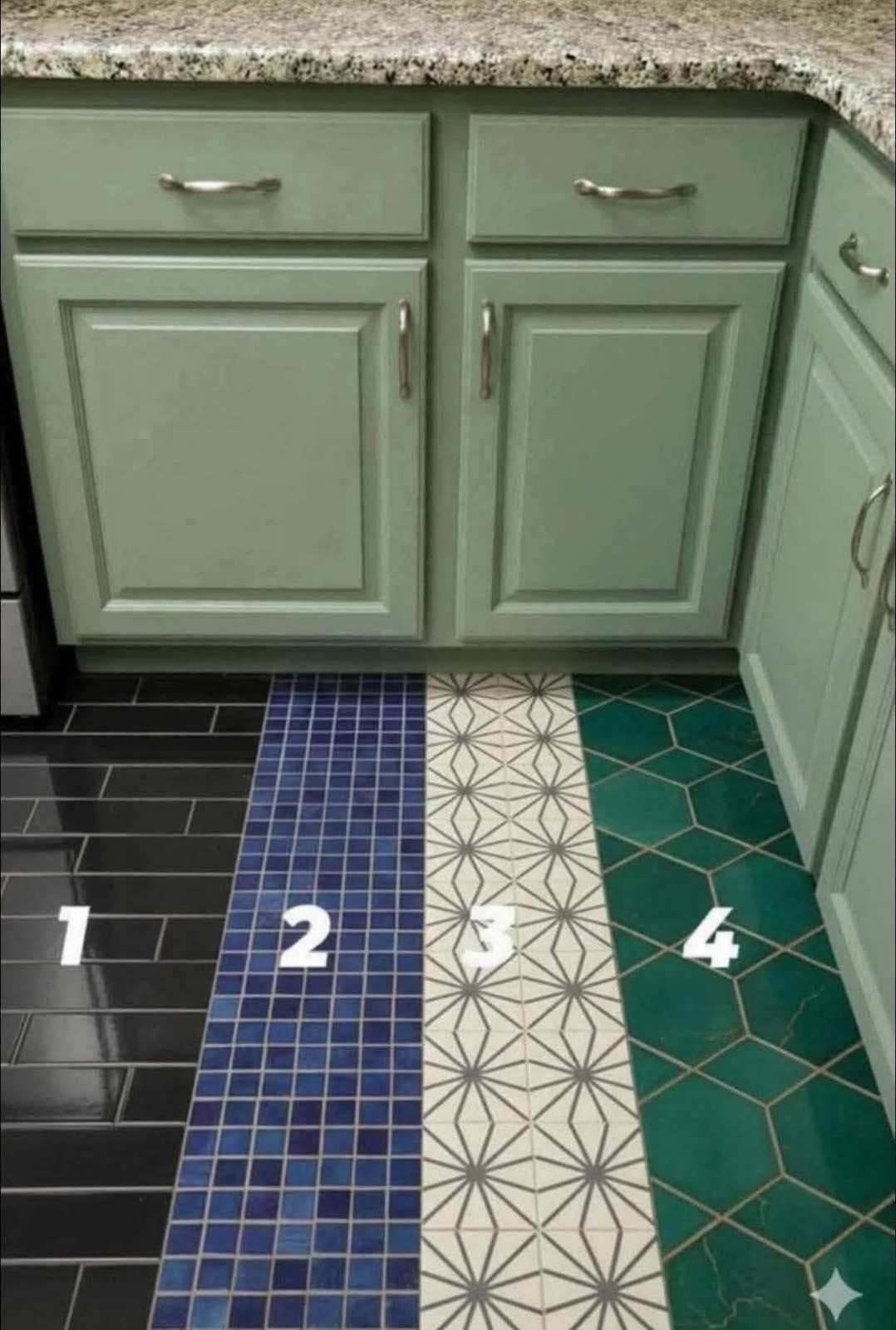
Geometric or Moroccan Patterns
Add personality and charm — especially in Mediterranean or boho-inspired kitchens.
Patterned tile floors can become the focal point — meaning other elements should remain balanced.
Texture: The Secret Ingredient
Texture isn’t just about looks. It’s about safety and comfort.
Glossy tiles reflect light beautifully — but can become slippery when wet.
Matte or textured finishes:
Provide better grip
Hide smudges and footprints
Feel softer visually
In a kitchen, slip resistance matters.
If you frequently cook or have children running through the space, choose tiles with a slightly textured surface for safety.
Grout: The Detail That Changes Everything
Grout may seem minor — but it dramatically affects the final look.
ADVERTISEMENT
