ADVERTISEMENT
The Deadliest Food on Earth: Why Millions Risk Death Every Single Day
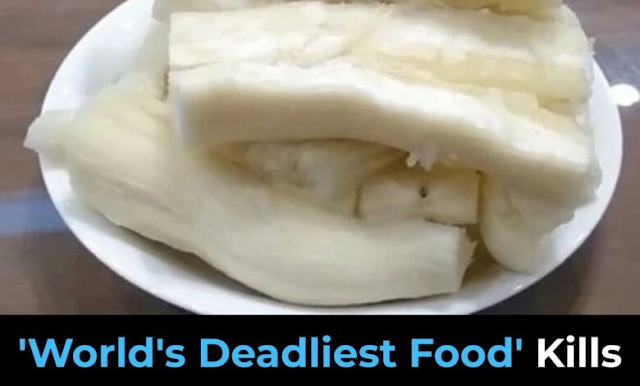
Every year, more than two hundred people make the fatal mistake of consuming the world’s deadliest food, yet nearly half a billion people continue to put it on their dinner plates daily. It isn’t a rare, exotic poison or a mysterious lab-grown toxin—it is a humble, common plant that serves as a vital staple for entire nations. If prepared incorrectly, it transforms into a lethal weapon capable of shutting down human organs within minutes. Why do millions gamble with their lives for a meal, and is the food on your table a ticking time bomb hiding in plain sight?
The grim reality of this defense mechanism is that it is intentionally evolved to kill. Nature designed cassava to repel insects, animals, and hungry pests, but human beings have learned to override that design through exhaustive processing. According to the World Health Organization, the dangers associated with improperly prepared cassava are not merely theoretical; they are a tragic annual statistic. Approximately two hundred people die every single year because they lacked the time, the resources, or the knowledge required to strip the poison from the root. This is why the plant has earned the terrifying label of the “world’s deadliest food,” a title that highlights the precarious balance between sustenance and sudden, irreversible collapse.
ADVERTISEMENT
