ADVERTISEMENT
The FIFA boss also said that people should “chill” about the case of the Somali referee refused entry into the US, insisting that FIFA couldn’t tell governments who to let into their countries. “We don’t live on the moon; we live on Planet Earth,” he said. Infantino also argued that only FIFA and its relationships could have secured permission for Iran to play its games on US soil.
Cooley, also a professor of political science at Barnard College, argued that Trump’s team may be making a classic immigration play to his base with treatment of World Cup fans, delegations and referees. “If the world is up in arms or disappointed in that, who cares?” Cooley said, paraphrasing a possible administration sentiment.
Football, not politics, is usually the winner
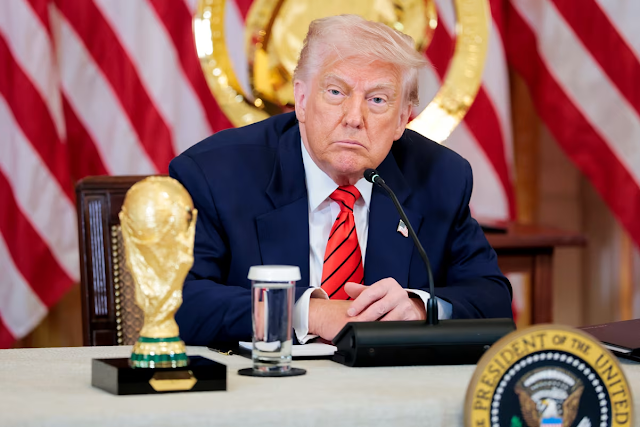
The World Cup finals are widely regarded as the world’s largest sporting event. According to FIFA, 1.5 billion viewers watched the final in Qatar in 2022. Trump often marvels at the scale of the event, saying last year in the Oval Office, “(It’s) like three Super Bowls every day for a month.”
Trump can be expected to weigh in throughout the tournament on social media or any on- or off-field controversies, in keeping with his habit of using sports to drive social, cultural and political messages. During his first term, for example, he often slammed former NFL quarterback Colin Kaepernick and other players who took a knee to protest police brutality.
But mixing sports and politics can backfire. He was brutally booed after showing up at an NBA Finals Game in New York on Monday night. And his craving to co-opt others’ success can overshadow the moment. The US hockey triumph over Canada in the final of the Winter Olympics this year turned a moment of national unity into one of political division after Trump and his FBI Director Kash Patel inserted themselves into the team’s victory celebrations.
ADVERTISEMENT
