ADVERTISEMENT
Creating the “High” of Attraction
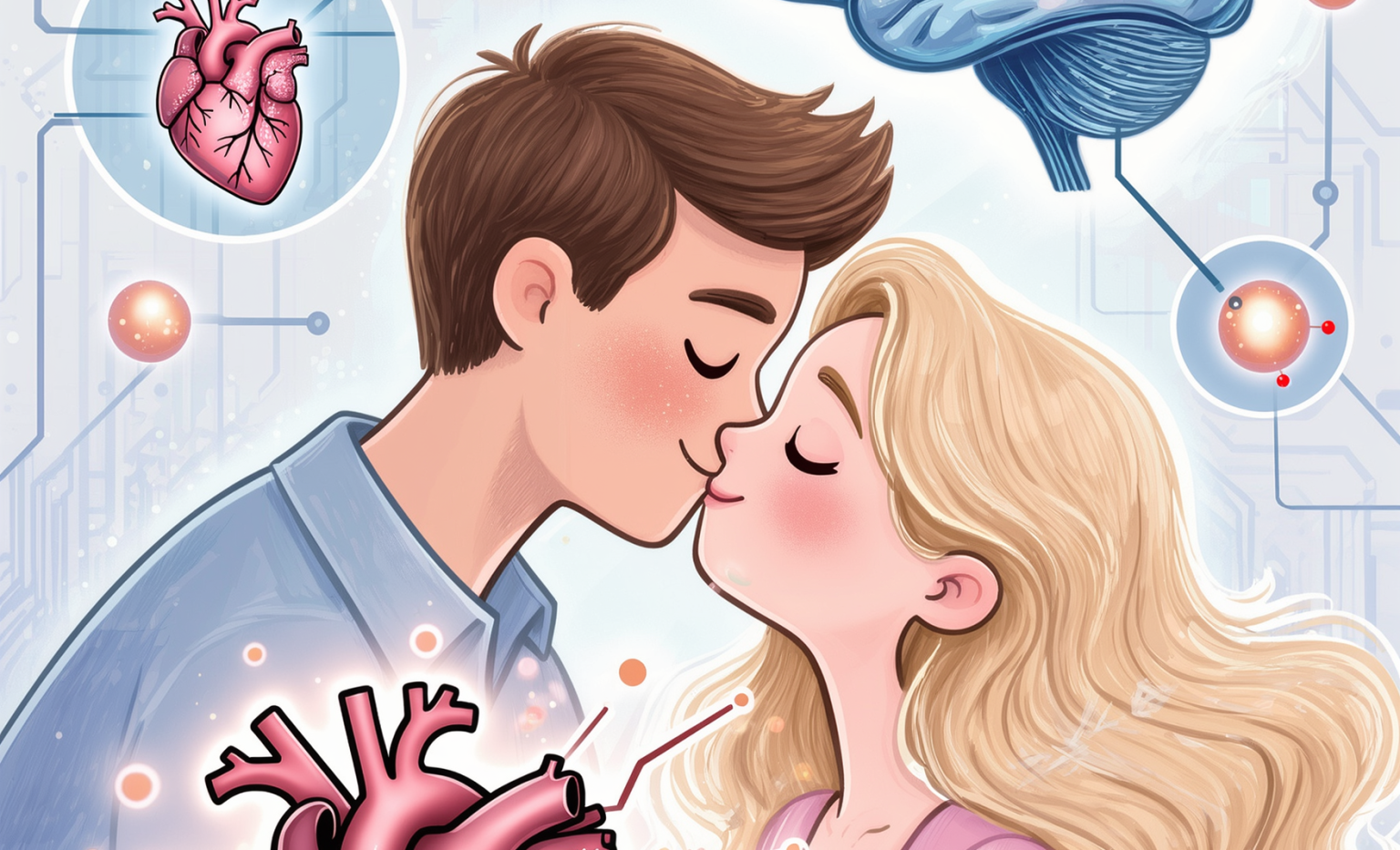
During a kiss, dopamine levels spike in the brain’s ventral tegmental area and the nucleus accumbens. This creates a sensation of intense pleasure and focus. Because the brain perceives this as a highly rewarding experience, it reinforces the behavior, making you want to prolong the kiss or repeat it in the future.
The Love Hormone: Oxytocin and the Foundation of Trust
While adrenaline and dopamine provide the “fire” of a kiss, oxytocin provides the “warmth.” Often called the “cuddle hormone” or “love hormone,” oxytocin is released during physical touch, particularly during prolonged kissing and intimacy.
Strengthening the Pair Bond
Oxytocin’s primary role is to foster trust and emotional attachment. In the context of a kiss, it helps to lower social inhibitions and create a sense of security between partners. Interestingly, oxytocin has a complex relationship with the heart. While it is known for its ability to lower overall stress and blood pressure in the long term, the initial surge during an intimate moment can contribute to the emotional intensity that keeps the heart racing.
The Physicality of Circulation: Increased Blood Flow
Beyond the hormones and neurotransmitters, there is a purely mechanical reason for the increased heart rate: hemodynamics. During a kiss, the body undergoes a shift in how blood is distributed.
Supporting Heightened Sensitivity
Because the lips and tongue are so active and the nerves are firing so rapidly, the body demands more oxygen for these specific tissues. Furthermore, the general state of arousal causes blood to move toward the surface of the skin—often resulting in the “blush” associated with romantic moments.
The Psychology of Anticipation: Mind Over Matter
It is a well-known phenomenon that the heart can start racing before the lips even touch. This is due to the power of psychological anticipation.
This psychological buildup means that by the time physical contact occurs, your heart is already at a “sprint.” The kiss itself serves as the culmination of an emotional journey that began the moment the intent was formed.
Scent, Taste, and Selection
ADVERTISEMENT
